
Dryer Vent Cleaning
Baltimore, MD
Clothes taking two cycles to dry. A dryer that runs hot. Weak airflow at the outside vent. Those usually point to lint built up somewhere in the exhaust line.
More Fresh Air Services cleans dryer vents throughout Baltimore City and Baltimore County. We clear the accessible exhaust path from the dryer to the exterior, check the termination outside, and tell you plainly if we find something cleaning alone won’t fix.
Tell us where the home is and what you are seeing. We will get back to you with the next step.
or call now (888) 509-3828
Signs Your Dryer Vent Needs Cleaning
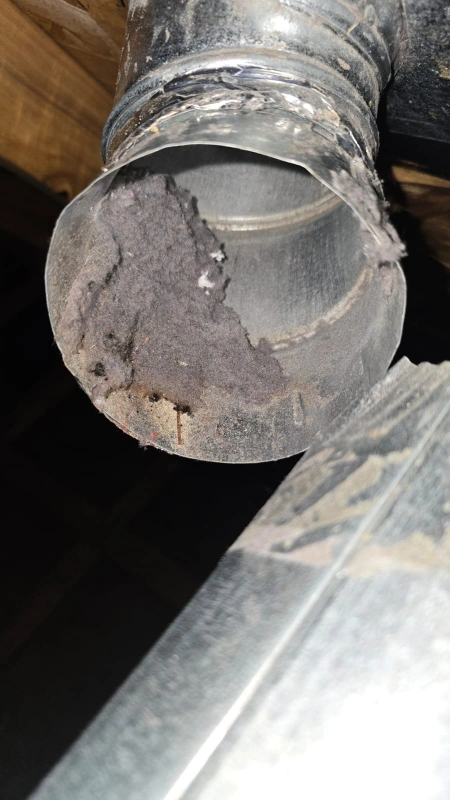
A dryer does not have to stop working before the exhaust line deserves a look. The common signs:
- Clothes still damp after a normal cycle
- Drying times that have crept up over months
- The dryer or laundry room feeling unusually hot
- A burning or hot-lint smell
- Lint collecting around the dryer or the connection behind it
- Little or no airflow at the outside vent
- An exterior vent flap that barely opens when the dryer runs
- Moisture or dampness around the outdoor termination
None of these confirms a clogged vent on its own. A crushed transition hose, a blocked exterior hood, a separated duct joint, or an appliance fault can all produce the same symptoms. That is why we inspect the venting system before telling you what it needs.
What's Included in Our Dryer Vent Cleaning
Your lint screen covers the first few inches of the exhaust system. The rest of the route can include the connection behind the dryer, the transition duct, the wall penetration, concealed ductwork, every bend, and the exterior termination. Lint settles anywhere along that path, so the job has to cover the whole run.
1.
Confirm the Setup
Before anything is moved, we confirm where the dryer sits, where the vent exits and how the run is reached. The laundry room should look the way we found it.
2.
Inspect the Dryer Connection
We check the visible connection behind the dryer for packed lint, a loose fitting, a crushed transition duct, or visible damage. If something needs repair rather than cleaning, you hear that before we go further.
3.
Access the Vent Line
No two Baltimore homes are set up the same way. Some dryers vent through a nearby exterior wall in two or three feet. Others run a long concealed path with several bends before reaching outside. How we access the line depends on its actual length, the available access points, and where it terminates.
4.
Remove the Lint and Debris
The goal at this stage is removal, not pushing lint farther down the duct. Material gets loosened along the run and captured at the access point rather than blown deeper into the line or into the room.
5.
Check the Exterior Termination
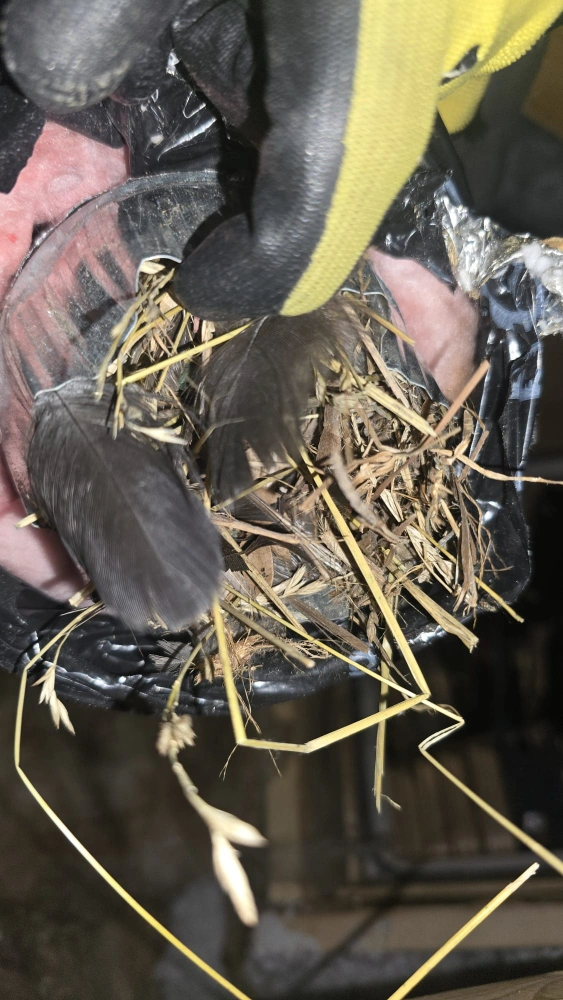
The outside opening matters as much as the inside of the duct. We look for lint packed behind the hood, nesting material, physical damage, and a vent flap that will not open freely.
6.
Reconnect and Verify Airflow
We reconnect the dryer and check airflow before calling the job finished. If we found a condition that needs repair, you know about it before we leave.
Dryer Vent Problems We Find in Baltimore Homes
- Crushed transition duct. Pushing a dryer tight against the wall can crush or kink the connecting hose. Airflow drops even though everything looks fine from the front.
- Loose or separated connections. A poorly fitted joint lets warm, moist exhaust and lint escape into a wall cavity or floor space instead of going outside.
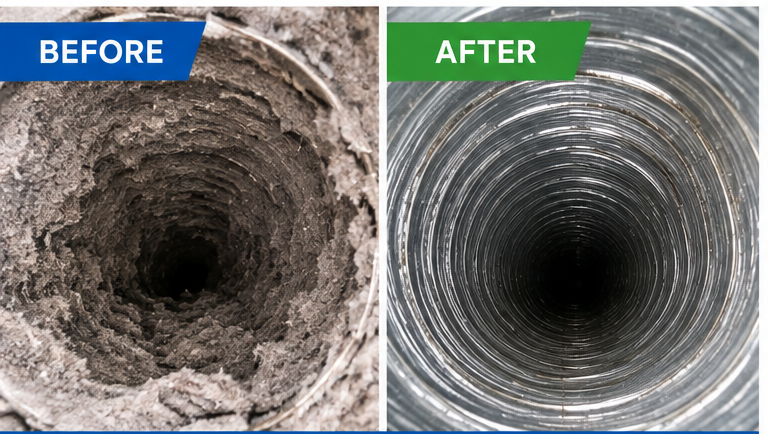
- Packed lint in the line. It builds gradually. The U.S. Fire Administration reports roughly 2,900 residential clothes dryer fires a year nationally, with failure to clean identified as the leading contributing factor.
- Blocked exterior vent. Debris, bird nesting material, or a damaged cover can obstruct the outside termination even when the interior line is clear.
- Long or complicated runs. More bends and more distance mean more places for lint to settle and for moisture to condense.
- Moisture around the termination. Dampness outside often signals an airflow problem worth investigating rather than assuming it is simple lint.
Why Baltimore Venting Setups Vary So Much
Baltimore is not one type of house. Rowhomes in Hampden, Canton, Federal Hill and Charles Village sit alongside detached houses, townhomes, condos and newer construction across the county. The venting changes with the building.
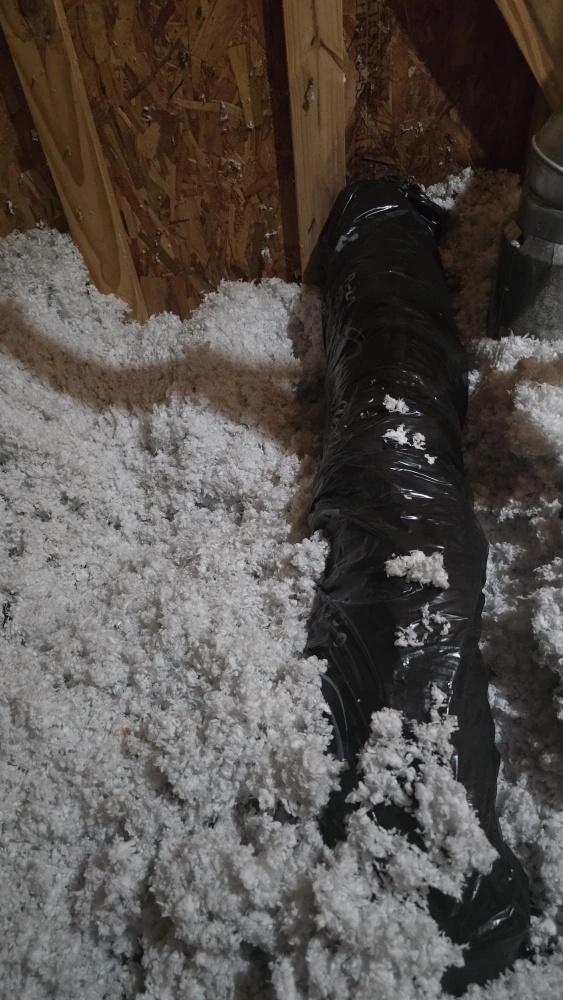
In older rowhomes, the dryer might be in a basement, a closet, or an upper-floor laundry area, with the exhaust running through a wall or another part of the building before it reaches outside. Sometimes the exterior termination is easy to reach. Sometimes it is high on the building or awkward to get to. A quick pass over the short hose behind the dryer does not mean the whole route has been cleared.
Newer suburban properties often have shorter, more direct runs, though not always. Basement laundry rooms, finished additions and multi-story layouts still produce long or awkward exhaust paths. Dryer vent cleaners in Baltimore run into all of these, which is why the approach has to match the vent rather than the other way around.
How Often Should a Dryer Vent Be Cleaned?
Once a year is a reasonable baseline for most households. The Consumer Product Safety Commission recommends cleaning lint from the dryer vent pipe at least annually and checking that the outdoor flap opens while the dryer is running.
Your interval may be shorter depending on:
- How often the dryer runs and how many people are in the house
- Vent length and the number of bends
- Duct material and condition
- Any change in drying performance
- Your dryer manufacturer’s maintenance instructions
A household running several loads a week needs attention sooner than one drying laundry twice a month.
Professional cleaning does not replace the lint screen. The U.S. Fire Administration recommends clearing the lint filter every time you use the dryer.
Between cleanings: clear the lint filter every load, glance at the connection behind the dryer now and then for crushing or gaps, and watch the outside flap while the dryer runs. If drying times jump suddenly or the dryer feels hotter than usual, get it looked at. Do not keep running a dryer with a vent you know is damaged or disconnected.
Dryer Vent Cleaning Cost in Baltimore
Price depends on your vent configuration. What moves it:
- Vent length and number of bends
- Where the exterior termination sits
- General accessibility
- Roof or second-story access
- Obstructions found during the inspection
- Any repairs identified during the service
The inspection is free, and we give you the price before any work starts.
Call 888-509-3828
with your Baltimore ZIP code and a quick description of your setup.
Cleaning or Repair? The Difference Matters
Cleaning removes lint and debris from a system that is otherwise intact. Repair addresses a physical problem: a crushed hose, a disconnected duct, a damaged termination, or a section nobody can reach.
If we find something cleaning cannot fix, we explain what we found and what the options are. You decide from there with real information instead of a guess.
What Happens When You Book
- Tell us your Baltimore ZIP code and where the dryer sits in the house
- We ask a few questions about symptoms and access
- You get your appointment window and expected price before anyone arrives
- The technician protects the work area before starting
- We inspect the vent configuration and confirm the plan with you
- Cleaning proceeds if the system is suitable for standard service
- We verify airflow afterward and walk you through what we found
Baltimore Dryer Vent Cleaning Service Areas
We serve homeowners across Baltimore City and Baltimore County, including Hampden, Charles Village, Remington, Canton, Fell’s Point, Federal Hill, Locust Point, Mount Vernon, Harbor East, Patterson Park, Roland Park, Mount Washington and Park Heights.
Looking for dryer vent cleaners in Baltimore County specifically? Mention your neighborhood or ZIP code when you get in touch and we will confirm coverage, including properties just outside the city line.
We also offer air duct cleaning in Baltimore and throughout the Maryland suburbs.
What We Can and Cannot Promise About Dryer Vent Safety
No company can honestly guarantee that a vent cleaning eliminates fire risk. Dryer fires involve electrical faults, mechanical failure and other factors that have nothing to do with lint.
What the data does show: the U.S. Fire Administration identifies failure to clean as the leading contributing factor in residential clothes dryer fire ignitions, and NFPA analysis found dust, fiber and lint were the first material ignited in 27 percent of home dryer fires.
What we can promise is narrower and more useful. We clean the vent, inspect what we can access, identify visible problems, and tell you exactly what we found.
Frequently Asked Questions
No. The lint screen and the exhaust duct are separate parts of the system. The screen catches what it can at the opening; the rest travels down the vent line and settles there. The U.S. Fire Administration recommends clearing the lint filter every time you use the dryer, in addition to having the vent line cleaned.
Yes. A restricted exhaust path reduces airflow, so moist air leaves the drum more slowly and cycles run longer. Appliance faults and other venting problems cause the same symptom, which is why we inspect before diagnosing.
Most jobs take under an hour. Longer runs, multiple bends, and roof or upper-floor terminations add time. You get a realistic window when the appointment is booked.
Yes, someone needs to let the technician in and give access to the dryer and the exterior termination. You do not need to do anything else once we start.
Roof terminations need ladder or roof access and take longer than a wall exit.
Shared or stacked vent systems in multi-unit buildings often need building management approval and sometimes a different scope than a single-family home.
No. A dryer vent carries heat, moisture and lint from the clothes dryer to the outside. HVAC ductwork is part of your heating and cooling system and moves conditioned air around the house. Different systems, different methods. Some homeowners search for dryer duct cleaning in Baltimore and mean the dryer exhaust line, which is this service. Air duct cleaning is a different service, and we do both.
Nesting material in an exterior termination is common in spring and blocks airflow the same way packed lint does.
Schedule Dryer Vent Cleaning in Baltimore
Your dryer does not need to be broken before the exhaust line earns a look. If clothes are taking longer to dry, the unit runs hot, airflow outside seems weak, or you cannot remember the last cleaning, it is worth having someone check.
Call More Fresh Air Services at 888-509-3828 or send a message with your ZIP code and where the dryer sits. We will confirm coverage, give you a price, and schedule a visit.
