
Dryer Vent Cleaning
Washington DC
Two cycles to dry one load. A dryer that runs hot. Barely any air moving at the vent outside. Lint in the exhaust line is the usual cause.
More Fresh Air Services provides dryer vent cleaning throughout Washington DC. We travel to homes across the District, clear the accessible exhaust path, check the termination outside, and verify airflow before we leave.
Signs Your Dryer Vent Needs Cleaning
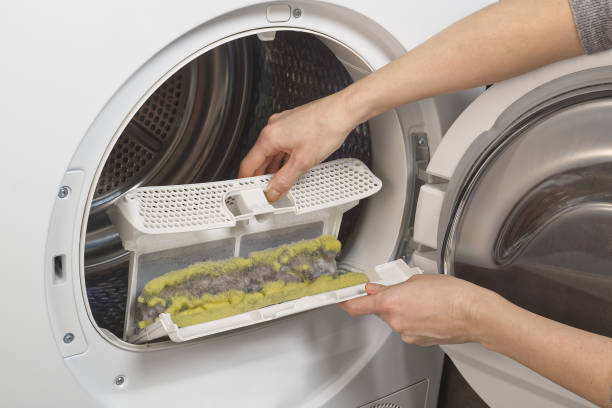
The clearest signs are longer drying times, a dryer that runs unusually hot, weak airflow at the exterior vent, and an outside flap that barely opens.
- Clothes still damp after a normal cycle, or needing a second run
- Drying times that have crept up over months
- The dryer or laundry area feeling unusually hot
- A burning or hot-lint smell
- Lint collecting around the dryer or around the exterior hood
- Little or no airflow at the exterior termination
- A vent flap that will not open freely while the dryer runs
- Moisture or damp air around the laundry area
One symptom does not confirm a vent blockage. A crushed transition hose, a separated duct joint, an obstructed exterior hood, or a fault in the dryer itself can produce the same signs. That is why we inspect before telling you what the system needs.
What We Do During Dryer Vent Cleaning
Six steps, in this order.
1.
Inspect the System
We look at the connection behind the dryer, the accessible duct run, how it is routed, and the exterior termination. That tells us what we are dealing with before anything is touched.
2.
Protect the Work Area
Does the crew lay floor protection and cover surrounding surfaces as standard? If yes, state exactly what is done. If not, remove this step.
3.
Clean the Accessible Exhaust Path
Not just the short section behind the appliance. Lint settles anywhere along the vent run, and it collects fastest at bends where airflow slows.
4.
Check the Exterior Termination
The outside opening matters as much as the duct. We look for lint packed behind the exterior hood, nesting material, physical damage, and a flap that will not open freely.
5.
Verify Airflow
Removing lint and confirming air moves are two different things. The second one is the result you are paying for.
6.
Explain What We Found
If the dryer duct is damaged, the routing is a problem, or a section cannot be reached, you hear it plainly. Cleaning does not fix every dryer problem and we will not pretend otherwise.

Why Choose Us for Washington DC Dryer Vent Cleaning
- We clean the accessible run, not just the connection. The section behind the dryer is not the system. The exhaust duct continues toward the exterior, and restrictions occur anywhere along it.
- We check airflow after cleaning. Pulling out lint is not proof the system works. Verifying air moves is.
- We look past the lint. Damaged ducting, crushed connections and poor routing cause the same symptoms as lint buildup. Finding those is part of the inspection.
- We say when it is not the vent. A dryer vent cleaner in DC who diagnoses every slow dryer as a dirty vent is guessing. Sometimes the exhaust is fine and the appliance is the problem.
- Air systems are the whole business. Dryer vents, air ducts, and the equipment connected to them. Not one line item on a forty-service menu.
Dryer Vent Cleaning or Repair: What's the Difference?
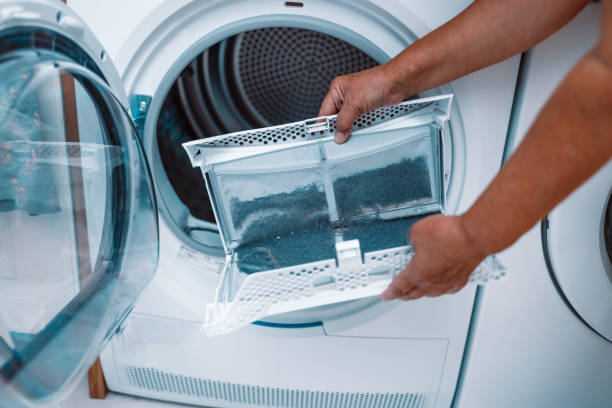
Cleaning removes lint from a system that is otherwise intact. Repair fixes a physical problem: a crushed transition hose, a disconnected duct, a damaged exterior termination, unsuitable vent material.
There is a third possibility worth naming. If the vent is clear, airflow is good, and the dryer still will not dry properly, the problem is the appliance rather than the exhaust. That is an appliance repair call, not a second vent cleaning.
How Often Should Dryer Vents Be Cleaned?
For most homes, once a year is a sensible starting point. The U.S. Consumer Product Safety Commission recommends cleaning lint from the dryer vent pipe at least annually, and checking that the outdoor vent flap opens while the dryer is running.
If you are wondering how often to clean a dryer vent in your own home, usage, vent length, number of bends and household size all matter. Clean more often if you run several loads a week, dry pet bedding or towels regularly, have a long vent run with multiple bends, or have noticed drying time climbing. You can usually go longer with a one or two person household, a couple of loads a week, and a short straight vent out a nearby wall.
Cleaning the exhaust line does not replace the lint screen. The U.S. Fire Administration recommends clearing the lint filter every time you use the dryer.
If you cannot remember when the vent was last cleaned, it has been long enough to check.
Dryer Vent Cleaning Cost in Washington DC
Provide real pricing. Starting price, typical range, whether estimates are free, whether quotes are given in writing, and whether the price is confirmed before the visit. First-party pricing belongs at the top of this section. Third-party averages are context, not the main answer.
Price depends on the vent, not the address. What moves it:
- Length of the exhaust run and number of bends
- Where the dryer sits relative to an exterior wall
- Accessibility of the connection and the exterior termination
- Roof or upper-floor access
- How much lint buildup is in the line
- Any repair needs found during the inspection
A short accessible vent is a different job from a long concealed run with several bends, so we price the system rather than quoting one number for every property.
For outside context, Angi’s 2026 pricing data puts the national average for professional dryer vent cleaning at about $145, with a range of roughly $75 to $340 depending on vent location and access.

Call 888-509-3828
with your neighborhood and where the dryer sits, and we will give you a price.
Where We Provide Dryer Vent Cleaning in Washington DC
More Fresh Air Services LLC operates from its verified business location and travels to customers across Washington DC and the surrounding region.
State the actual business location here. The Google Business Profile is currently associated with Culpeper County, Virginia, while an earlier note gave a Silver Spring, MD address and an Angi listing shows a third. One address must be chosen and used consistently across the site, the Google Business Profile, and every citation.
We serve residential customers throughout the District, including Capitol Hill, Georgetown, NoMa, Navy Yard, Shaw, Petworth, Columbia Heights, Dupont Circle, Brookland and The Wharf.
Confirm this neighborhood list matches genuine coverage. Remove any area not actually served.
If you are looking for vent cleaning in Washington DC, it is worth knowing the difference between the two services. Dryer exhaust cleaning clears the line running from your dryer to the outside. HVAC duct cleaning covers the ductwork that heats and cools the house. Need the second one? See our Air Duct Cleaning Washington DC service. For coverage outside the District, see our service areas.
Dryer Vent Safety and Fire Risk
No company can honestly promise that dryer vent cleaning prevents every dryer fire. Dryer fires also involve electrical faults, mechanical failure and other causes unrelated to lint.
What the data supports is narrower. The U.S. Fire Administration identifies failure to clean as the leading contributing factor in residential clothes dryer fires. Keeping the exhaust line clear addresses one recognized risk factor. It does not remove the others.
What we can commit to is straightforward: we clean the accessible vent, inspect what we can reach, identify visible problems, and tell you what we found.
Dryer Vent Cleaning in DC Rowhouses, Condos and Apartments
Washington DC housing varies, and the venting varies with it. What we run into most:
Rowhouses. The dryer may sit in a basement, a closet, or an upper-floor laundry area. When the laundry is far from an exterior wall, the exhaust run is longer and often concealed, sometimes with several bends. The termination can be high on the wall or hard to reach.
Condos and newer buildings. Interior laundry closets and stacked units can put the dryer well away from an exterior wall, which makes for longer vent runs and limited access at the connection.
Apartments. Access to the duct connection is often restricted, and shared or stacked exhaust systems may need building management approval before work starts.
Are condo and apartment buildings serviced, and under what conditions? Does the crew have experience with stacked or shared exhaust systems in DC buildings?
We work with the system in front of us rather than assuming every property is set up the same way.
Dryer Vent Cleaning FAQs
Partly. You can wash the lint screen, vacuum as far into the connection as your hose reaches, and check that the exterior flap opens when the dryer runs. What you cannot do at home is clear a long concealed vent run or spot a crushed section behind drywall. If the accessible parts are clean and drying time is still climbing, the problem is further down the line. dryer vent DIY guide
No. The lint screen catches what it can at the opening. The rest travels into the exhaust duct with the moist air and settles along the run. Separate jobs, and the screen needs clearing every load.
Provide the real typical duration. Do not publish an estimate that has not been confirmed.
Yes. Someone needs to let the technician in and provide access to the dryer and, where possible, the exterior vent. Nothing else is required of you.
It depends on the configuration, and many systems need both. A thorough job addresses the accessible exhaust path and inspects the exterior termination rather than working from one end and assuming the rest is clear.
Is roof access included in standard service, quoted separately, or not offered? State it plainly.
No. A dryer vent carries heat, moisture and lint from the dryer to the outside. HVAC ductwork moves conditioned air around your home. Different systems, different equipment, different jobs.
No company can honestly promise that. Lint buildup is a recognized dryer fire risk factor, and the U.S. Fire Administration identifies failure to clean as the leading contributing factor in residential dryer fires. Clearing the exhaust addresses that factor. Electrical and mechanical faults are separate causes that a vent cleaning does not touch.
Schedule Dryer Vent Cleaning in Washington DC
If clothes are taking longer to dry, the dryer runs hot, airflow outside seems weak, or you cannot remember the last cleaning, the exhaust system is worth checking.
Call More Fresh Air Services at 888-509-3828 or send a message with your neighborhood and where the dryer sits. We will confirm coverage, give you a price, and get you scheduled.
